After looking at several surrealist techniques, I have decided that I am going to use cut-up for my project. I have been making dream journals where I have recorded my dreams in quite a chaotic manner with no certain structure, just like how they appear. Then, I cut every word out and put them together in a different order using a cut-up technique in order to create a new meaning.
The cut-up technique (or découpé in French) is an aleatory literary technique in which a written text is cut up and rearranged to create a new text. The concept can be traced to at least the Dadaists of the 1920s, but was popularized in the late 1950s and early 1960s by writer William S. Burroughs, and has since been used in a wide variety of contexts.
In the 1950s, painter and writer Brion Gysin more fully developed the cut-up method after accidentally re-discovering it. He had placed layers of newspapers as a mat to protect a tabletop from being scratched while he cut papers with a razor blade. Upon cutting through the newspapers, Gysin noticed that the sliced layers offered interesting juxtapositions of text and image. He began deliberately cutting newspaper articles into sections, which he randomly rearranged.
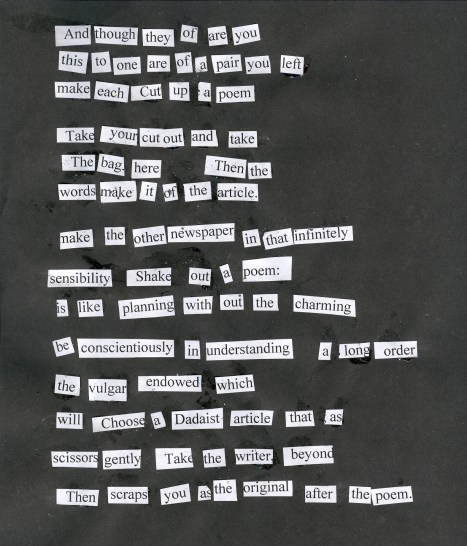
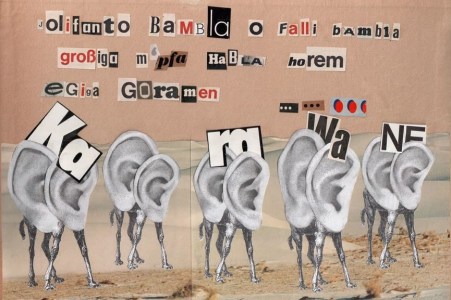
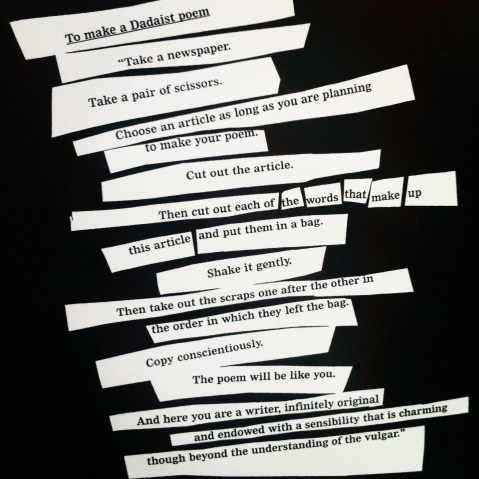
This is an example of a Dadaist poem:
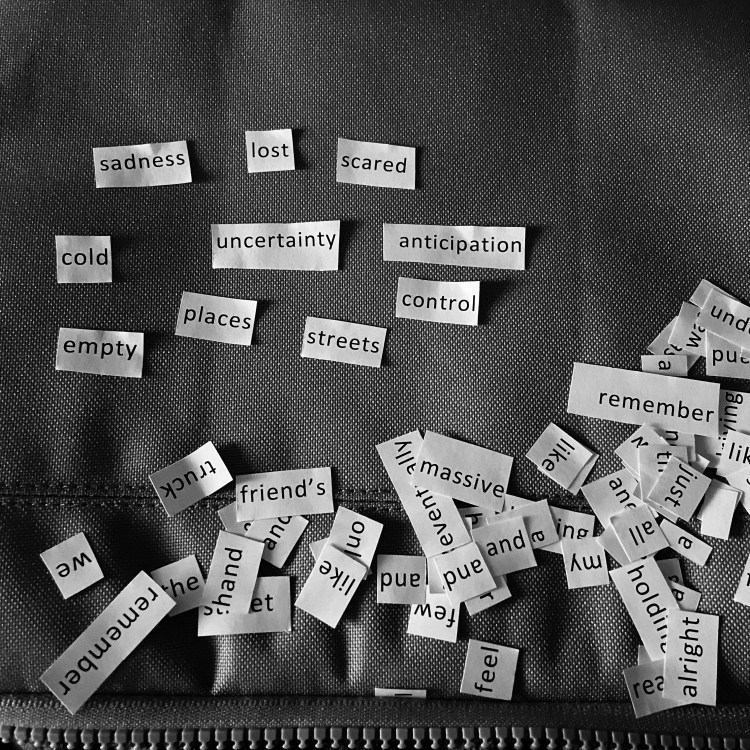
When rearranging the words I realised that you tend to produce a text which resonates with what’s on your mind at a given time. Here is an example of the cut-up that I made. It was produced at the time when the virus was emerging in the UK. The text that came out of it reflected some worrying thoughts that were on my mind. That way, I can say that I have accessed my subconscious and made it visible.
 Jane's Advanced Media Production Project